Finding the Perfect Ergonomic Desk Chair for Your Home Office
Introduction: The Importance of Comfort in Your Workspace
In today’s fast-paced work environment, many individuals find themselves spending extended hours seated at a desk, often without the necessary support to maintain comfort. This scenario is particularly prevalent among remote workers, who may underestimate the impact of their home office setup. The increase in telecommuting has necessitated a shift in how professionals consider their workspace; comfort is no longer a luxury but an essential aspect of productivity and well-being.
Working long hours in improperly designed chairs can lead to a myriad of physical discomforts, including back pain, neck strain, and even long-term musculoskeletal issues. Such discomfort not only detracts from individual productivity but can also negatively affect overall morale. Employees who are uncomfortable are less likely to be engaged and motivated, often leading to decreased job satisfaction and productivity.
The growing trend of remote work has underscored the necessity of creating functional and ergonomic home offices. As individuals transition to this new work paradigm, the importance of investing in ergonomic desk chairs becomes increasingly clear. A suitable ergonomic chair not only promotes better posture but also enhances comfort, reducing the risk of fatigue during long hours of concentration. This attention to comfort can significantly boost focus and efficiency, yielding better work outcomes.
In light of these considerations, creating a comfortable workspace equipped with proper furniture is crucial. Individuals are encouraged to carefully evaluate various ergonomic desk chair options, as this investment can lead to substantial improvements in productivity and overall quality of life while working from home.
#ad

- High-Resilience Molded Foam Seat – Won’t Flatten After 1 Year – Instead of budget foam that hardens and sags within mont…
- Adjustable Lumbar, Not a Fixed Afterthought – Unlike flimsy plastic supports that crack or lose tension, this chair feat…
- Breathable Mesh Backrest – No Peeling, No Heat Buildup – Say goodbye to flaking faux leather. The high-tension mesh back…
Understanding Ergonomics: Why Your Chair Matters
Ergonomics is the science of designing and arranging work environments to optimize human well-being and overall system performance. This discipline takes into consideration how individuals interact with their environments, particularly in the context of prolonged sitting, which is common in office settings. Selecting the appropriate office chair is crucial, as it directly influences not only comfort but also long-term physical health.
One of the primary goals of an ergonomic chair is to prevent common musculoskeletal issues such as back pain, neck strain, and repetitive strain injuries. An ergonomic design encourages proper alignment of the body, promoting a natural posture that supports the spine’s curves. With an adjustable chair, individuals can customize their seating position to fit their unique body shapes and preferences, significantly reducing the risk of discomfort and injury over time.
Moreover, the role of an ergonomic chair extends beyond physical health; it plays an important role in enhancing mental clarity and focus as well. When an individual is seated correctly and comfortably, they are less likely to experience distractions caused by discomfort. This level of comfort can lead to increased productivity and efficiency, creating a conducive environment for completing work tasks effectively.
In a home office setting, the choice of an ergonomic chair is vital in establishing a workspace that fosters both physical well-being and cognitive engagement. By investing in a chair that supports proper posture and aligns with ergonomic principles, individuals can create a workspace that not only mitigates the potential for pain and discomfort but also elevates their overall work experience.

- Most Comfortable And Relaxing: Equipped with headrest and lumbar pillow. When your neck feels sore from gaming or workin…
- More Stable Than Others: Common gaming chairs are equipped with plastic legs generally to save costs, but we still insis…
- Liberate Your Feet: Will you feel tired for sitting all the time? Sure. Then you can choose the chair with footrest to r…
What to Look for in an Ergonomic Desk Chair
When selecting an ergonomic desk chair for your home office, there are several important features to consider that enhance comfort, promote good posture, and support prolonged periods of sitting. The right chair can greatly influence productivity, overall well-being, and reduce the risk of musculoskeletal disorders. Here are key features to look for:
- Adjustable Seat Height: The seat height should be adjustable to accommodate the user’s leg length, ensuring that feet are flat on the ground or on a footrest with knees slightly lower than hip level.
- Lumbar Support: Lumbar support is crucial for maintaining the natural curve of the lower back. Look for chairs with adjustable lumbar support that can be positioned to fit your back’s anatomy.
- Armrest Adjustability: Armrests should be adjustable in height and width to provide support for the arms without causing shoulder strain. Ideally, they should allow the shoulders to relax while elbows remain close to the body.
- Seat Depth and Width: A well-sized seat allows for adequate support while promoting good posture. The depth should allow your back to rest against the backrest, with a gap of about 2-4 inches between the back of the knees and the edge of the seat. Choose a width that provides comfort without constriction.
- Material Choices: The material of the chair should balance comfort with breathability. Look for chairs made with high-quality foam or mesh that provide necessary cushioning and ventilation.
- Base Stability and Mobility: A stable, five-point base promotes safe movement. Chairs should also have smooth-rolling casters suitable for the flooring type in your home office.
- Reclining Features: Consider a chair with a reclining mechanism which permits the user to shift their weight and adjust their posture throughout the day. Look for chairs with locking positions to keep stability.
In consideration of different body types, it is advisable to test chairs for suitability. Taller individuals may benefit from a chair with a higher backrest and greater seat depth, while shorter users may need chairs with lower profiles and seat heights. Finding the perfect ergonomic desk chair is crucial in creating an efficient and healthy workspace.
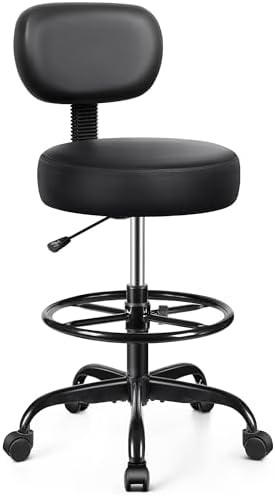
- Humanization Design: 15.8-inch cushion, more suitable for the comfortable size of most people; 23.6-inch five-star caste…
- Adjustable Height and Footrest Ring: The height of the rolling chair can be adjusted from 33.86 inches to 41.75 inches, …
- Ergonomic Detachable Backrest: The PU leather backrest of this standing chair can be removed as needed. The curved backr…
Tips for Creating an Ergonomic Workspace with Your Desk Chair
Creating a comfortable and ergonomic workspace is paramount for enhancing productivity and reducing strain while working, especially when using a desk chair for prolonged periods. A well-configured workspace can make a significant difference in overall comfort and health. To begin, the height of your desk should be adjustable but ideally, it should allow your elbows to be at a 90-degree angle when your hands rest on the keyboard. When seated in your ergonomic desk chair, your feet should touch the floor flatly or be supported by a footrest. This alignment helps maintain proper spinal posture while minimizing fatigue.
Monitor placement is another critical factor to consider in your workspace setup. The top of the monitor screen should be at or just below eye level, about 20 to 30 inches away from your face. This positioning prevents neck strain and allows for a more natural gaze angle. If you are using multiple monitors, ensure that the primary screen is directly in front of you, while secondary screens can be positioned at a slight angle to keep your neck aligned and comfortable.
In conjunction with your desk chair, keyboard positioning also plays a vital role in an ergonomic workspace. The keyboard should be placed at a height where your forearms remain parallel to the floor or slightly declined when typing. This helps in avoiding wrist strain. Furthermore, consider using a wrist rest to support your wrists while typing. Maintaining good posture is essential; keep your back straight, shoulders relaxed, and avoid slouching or leaning forward. Take regular breaks to stand up, stretch, and adjust your position to combat fatigue. Implementing these simple yet effective tips will ensure that your ergonomic desk chair and workspace work together harmoniously to create a supportive environment conducive to productivity.

- 𝐄𝐫𝐠𝐨𝐧𝐨𝐦𝐢𝐜 𝐇𝐨𝐦𝐞 𝐎𝐟𝐟𝐢𝐜𝐞 𝐃𝐞𝐬𝐤 𝐂𝐡𝐚𝐢𝐫: By increasing the sponge on the back of the chair. The back is more supportive, ergono…
- 𝐏𝐫𝐨𝐝𝐮𝐜𝐭 𝐒𝐢𝐳𝐞: The office desk chair seat width is 22 inches, the depth is 20 inches, and the height of the armrests is 8…
- 𝐖𝐡𝐞𝐞𝐥𝐬 𝐟𝐨𝐫 𝐚 𝐕𝐚𝐫𝐢𝐞𝐭𝐲 𝐨𝐟 𝐅𝐥𝐨𝐨𝐫𝐬: Suitable for family wood floors, carpets and marble floors. More smooth, silent, better …
As an Amazon Associate I earn from qualifying purchases